Published on Dec 09, 2025
Last modified on Dec 22, 2025
Is There a Connection Between Menopause and Foot Pain?
5 min read
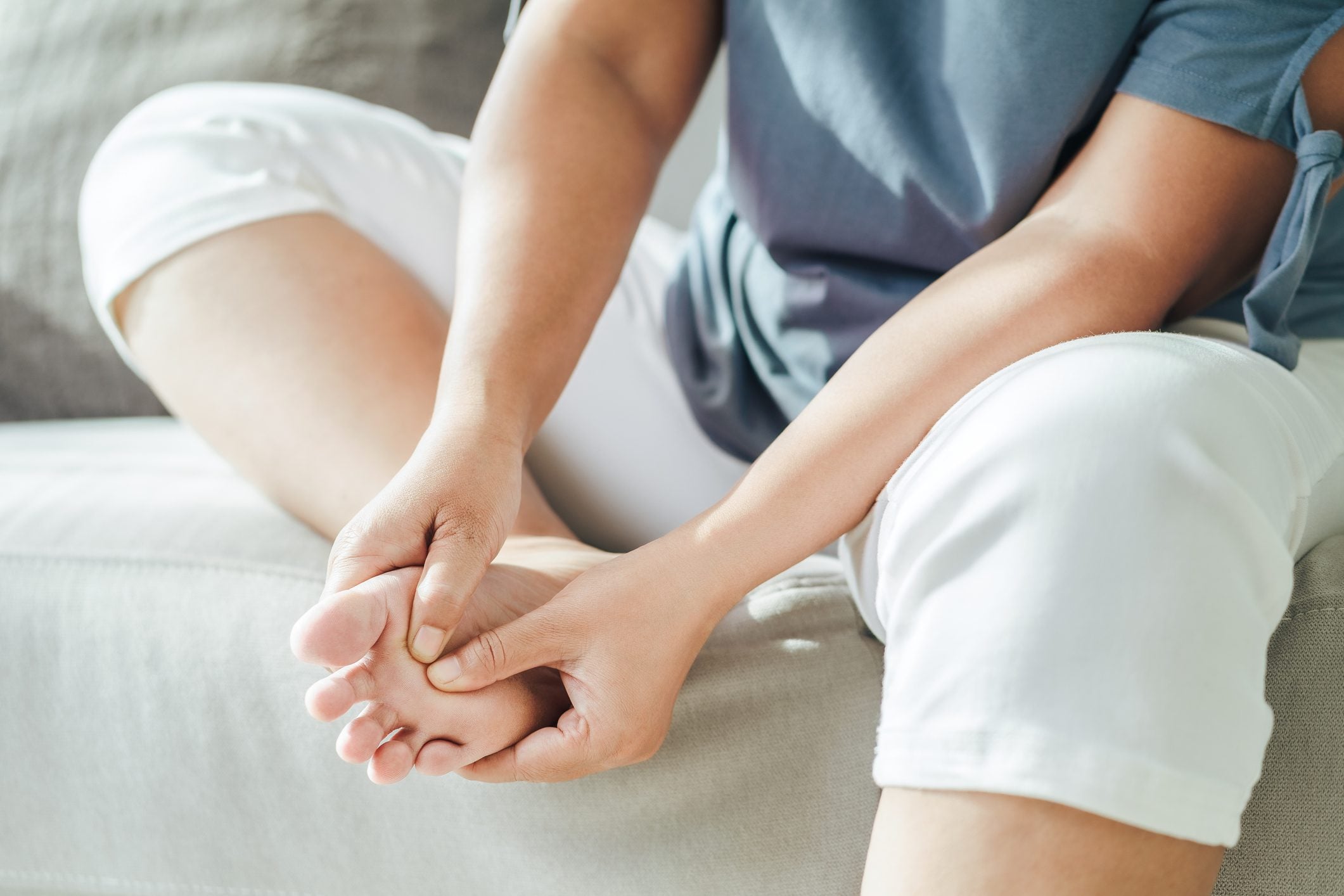
As we get older, most of us become familiar with the aches and pains that can accompany aging: a little creakiness here, a little stiffness there… but foot pain? No one warned us about that! We’re digging into the science behind foot problems in midlife and why menopausal women may be at greater risk of developing plantar fasciitis in particular.
What is plantar fasciitis?
Plantar fasciitis is a common cause of foot pain that occurs when the plantar fascia, a band of tissue that spans the bottom of our foot and supports the arch, becomes inflamed. It’s often at its worst in the morning when we take our first steps or after long periods of standing or sitting and can feel like stabbing pain in the heel or foot arch. Some risk factors for developing plantar fasciitis include:
- Poorly-fitting shoes
- Obesity
- Flat feet or high arches
- Over or underpronation
- Professions that involve long hours of walking or standing
Why am I suddenly getting plantar fasciitis around menopause?
As we mentioned, one of the biggest risk factors for plantar fasciitis is age, with most people impacted between ages 40 and 60. While more research is needed, there is also some thought that hormonal shifts in perimenopause/menopause may play a role. Theories around the hormone –– plantar fasciitis connection point to a couple things:
Collagen loss
We do know that estrogen supports tissue elasticity and the production of collagen, a building block protein that provides flexibility in our tendons, ligaments, connective tissues, and cartilage. So, when these hormones begin their decline in perimenopause, so too does collagen production.
Bone density changes
Unlike some other menopausal symptoms, the science behind bone loss is fairly simple: estrogen protects our bones, so when estrogen levels decrease during menopause, so too does bone density. In fact, up to 20% of bone loss happens during menopause. This change makes our feet more vulnerable to stress fractures, which can impact foot structure and distribute extra pressure on the plantar fascia.
READ MORE: Osteoporosis During the Menopause Transition
Treatment options for foot pain in menopause
1. Try RICE.
Former athletes or parents of athletes may be familiar with RICE, the acronym for rest, ice, compression, and elevation. These practices, especially the rest and ice, are a low-intervention way to manage plantar fasciitis.
2. Opt for supportive shoes.
If you’re one of the brave few in peri/menopause that somehow still wears high heels, we tip our hats to you. But, for the sake of your feet, if you’re struggling with heel pain you might want to give them a rest. Flats aren’t completely off the hook either, though –– some of the cutest, seemingly foot-friendly ballet flats actually lack arch support and cushioning. And to that end…
3. Try orthotics or insoles.
Orthotics have a bad rap, but there are actually way more options for fashion-forward orthotics these days. Insoles are also a great option for getting the shoes you already own to work better for you.
4. Prioritize maintaining a healthy weight.
We know, this one’s annoying. Of course, weight gain around this time TOO has to do with hormonal changes in menopause. (Give us a break, right?!) But it makes sense –– extra lbs means extra pressure on the feet and fascia. A healthy diet and regular physical activity go a long way here.
5. Have OTC pain relievers on hand.
Nonsteroidal anti-inflammatory drugs or NSAIDs, such as Advil and Aleve, can help ease swelling and pain from plantar fasciitis.
6. Try stretching and strengthening exercises.
Oftentimes, people with plantar fasciitis also have tight achilles and calf muscles, which can cause strain on the plantar fascia. Stretching these muscles, which you can do at home with a YouTube video, can help prevent and treat active plantar fasciitis.
Can hormone therapy help?
Menopausal hormone therapy (previously referred to as hormone replacement therapy or HRT) is commonly used for the management of menopausal symptoms like hot flashes and night sweats. While it isn’t prescribed or recommended for the treatment of plantar fasciitis, there have been anecdotal reports of improvement with hormone therapy. These may be due to the replenishment of estrogen, which is thought to reduce inflammation.
Check out Elektra’s full guide to menopause hormone therapy >>
The bottom line
Plantar fasciitis is a painful condition that can make moving about our day-to-day challenging. While there’s some thought that loss of estrogen and progesterone around menopause may play a role, more research is needed to confirm the exact nature of the connection. Fortunately, there’s plenty we can do on our own to maintain foot health, from insoles to strengthening exercises. If you find that pain is persisting even with lifestyle changes, you recommend seeing a podiatrist for individual support.
READ MORE: